Most men don't wake up one day and suddenly feel different. It's slower than that — a little less drive at the gym, a little more fatigue by 3pm, mornings that used to feel automatic now feel like a decision. If that sounds familiar, you're not imagining it, and you're definitely not alone.
The Biology Behind It
Testosterone levels in men tend to decline gradually starting in the 30s, continuing at a slow but steady rate through the decades that follow. At the same time, chronic stress tends to climb — work, family responsibilities and disrupted sleep all push cortisol higher, and elevated cortisol works directly against the systems that testosterone depends on.
It's rarely just one factor. Hormonal decline, accumulated stress, reduced sleep quality and less consistent exercise tend to compound each other, which is part of why the fatigue can feel bigger than any single cause would explain.
What Nutrition Can (and Can't) Do
No supplement replaces sleep, exercise or medical care when they're genuinely needed. But nutrition plays a real, well-documented role in supporting the systems involved. Adequate Zinc and Vitamin D3 status is linked in research to healthier testosterone levels. Adaptogens like Ashwagandha have research behind their ability to blunt the cortisol response to daily stress. B vitamins and Magnesium are foundational to the cellular energy production that underlies how tired or sharp you feel.
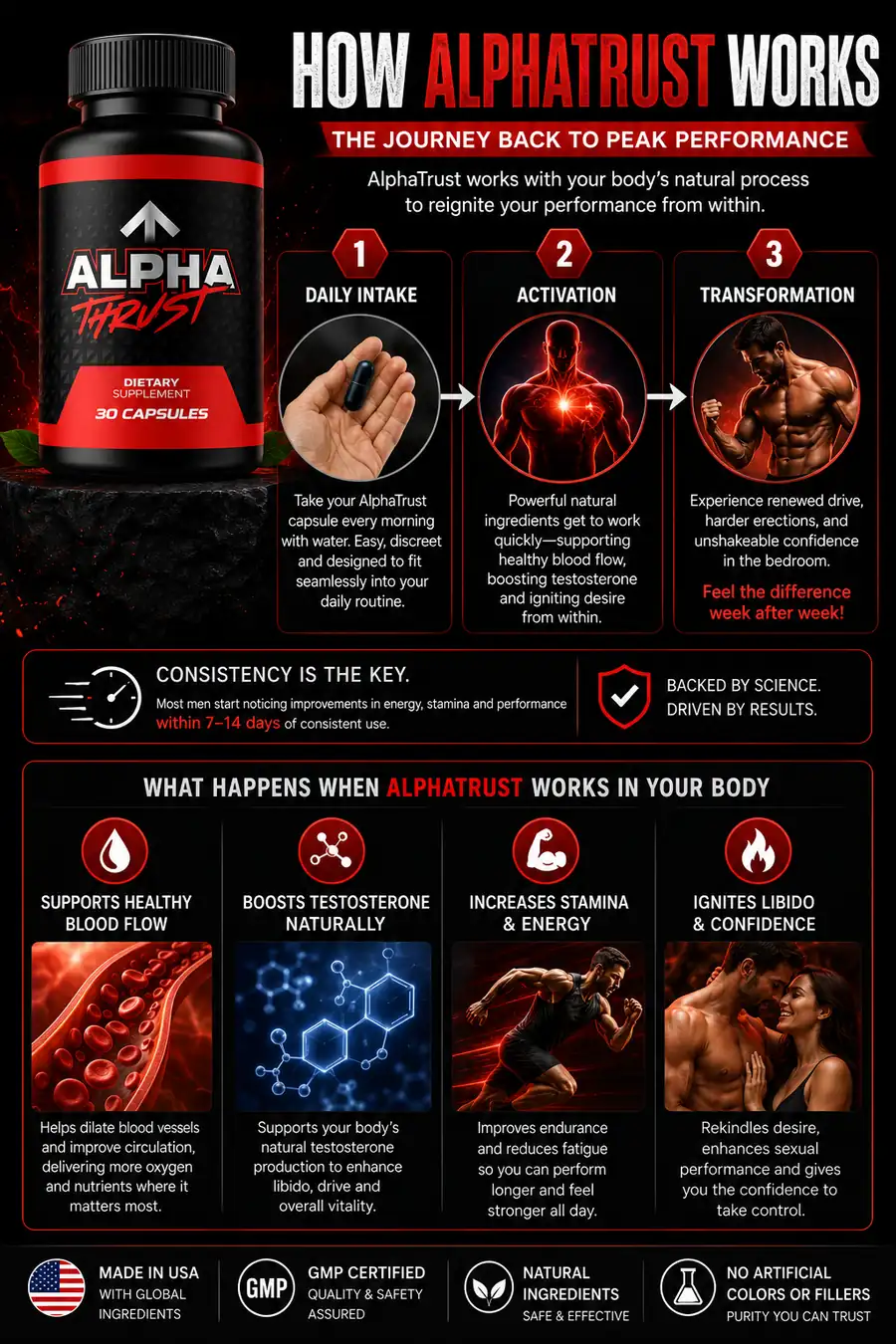
This is the thinking behind formulas like AlphaTrust — not a single miracle ingredient, but a combination addressing energy, hormones, circulation and stress together, because in practice those four systems rarely act independently.
A Realistic Starting Point
If energy and drive have been fading, a reasonable approach looks like this: get a baseline check with your doctor if you haven't recently, prioritize 7–8 hours of consistent sleep, keep moving physically even when motivation is low, and consider whether your daily nutrition covers the basics — zinc, magnesium, B vitamins, D3 — that these systems depend on.